
Why do solar lights get dimmer in winter?
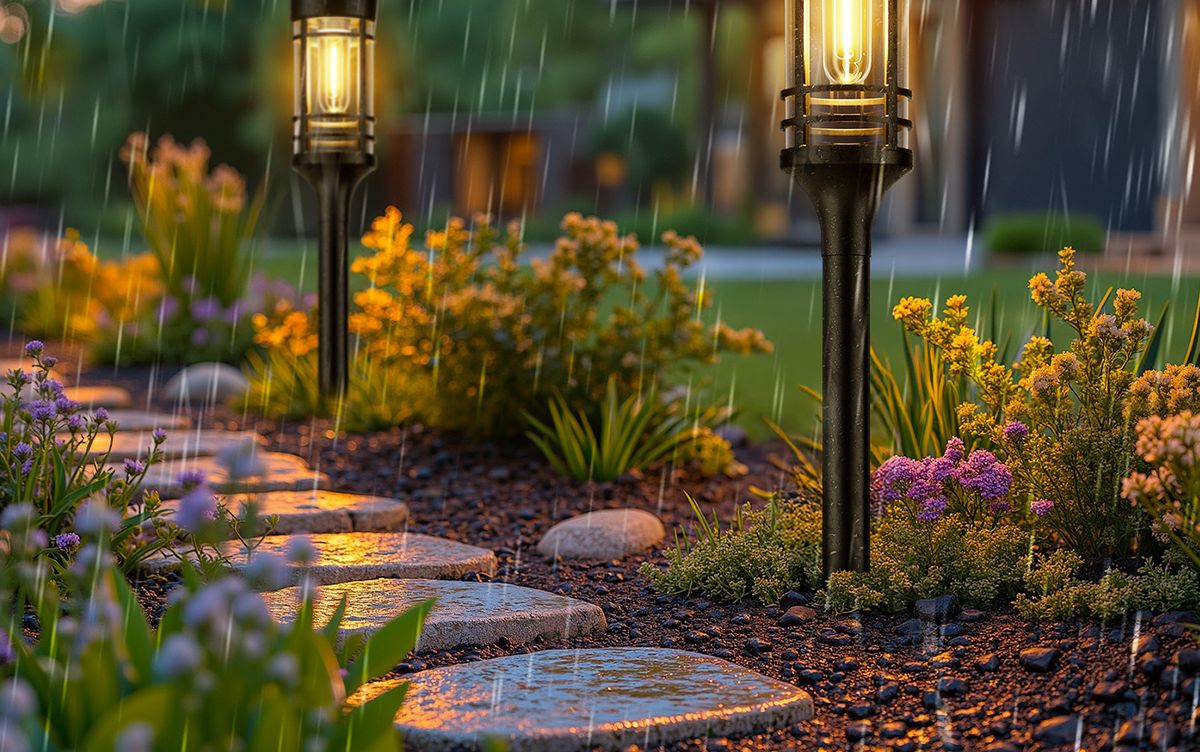
Every autumn the same message reaches us: the lights that ran till dawn in July now fade by midnight. Nothing is broken. The night shift simply got longer while the charging shift got shorter.
Three reasons, all about the sun
- Fewer hours of daylight means less time for the panel to fill the battery.
- The sun sits lower, so light hits the panel at a slant and delivers less energy.
- Nights are longer, so the same charge has to stretch further.
Cold plays a smaller part: rechargeable cells hold a little less in freezing weather and recover as it warms.
Five fixes that work
- Wipe the panels. Pollen, dust and hard-water spots from sprinklers can steal a surprising share of the charge.
- Move stakes out of winter shade — the shadow of the house is much longer in December.
- Brush snow off the panels after a storm.
- Use the lower mode if your light has one; it stretches a winter charge through the night.
- After two or three seasons, replace the rechargeable cell with one of the same type and size.
If one light in a matching set is noticeably dimmer than its neighbours in the same sun, the battery in that stake is usually the one to swap.
When to expect the glow back
From late February the days stretch again and the run time follows. By spring equinox most of our path lights are back to lighting the walk well past midnight.